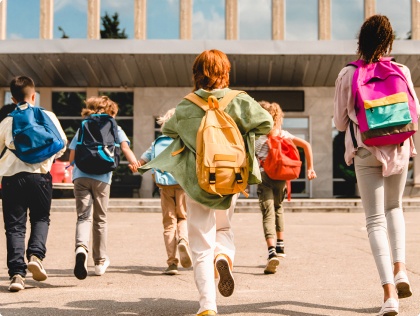
How can RPPs partner with and truly center youth? Youth from YouthCARES (Youth Civic Action for Resilient Environmental Solutions) share five pieces of advice based on their experiences.
Extra Articles
Post Type Description
HOW MIGHT SITUATIONAL MAPPING BE USED IN RPPs?
How could RPPs navigate the complex systems and relationships inherent to partnership work? RPP team members brought together by a study conducted under the New York City Early Childhood Research Network propose situational mapping analysis as one way to examine the multiple and interacting influences that can affect within- and cross-team collaboration.
WHAT IMPACT CAN RESEARCH-PRACTICE PARTNERSHIPS HAVE? SIX STORIES FROM OUR COMMUNITY
One powerful way to illustrate the impact of RPPs is to simply hear –and share– their stories: What have they worked on in a given timeframe? How has the work impacted students, teachers, and communities? Here, we “visit” six RPPs from across the country (as well as internationally) for a look at what they have been up to in 2025 – and what difference their work has made.
WHAT DO NEW TEACHERS NEED? HOW AN RPP WORKED TO TAILOR PROFESSIONAL DEVELOPMENT FOR FIRST-TIME TEACHERS
How can new teachers best be supported through professional learning? The Oakland Unified School District and University of California, Berkeley Research-Practice Partnership (RPP) shares research that explores new teachers’ experiences with professional learning in the district to better tailor early career learning that is valuable to these teachers.
MAKING THE CASE FOR INTEGRATING YOUTH-PARTICIPATORY ACTION RESEARCH INTO RESEARCH-PRACTICE PARTNERSHIPS
How can RPPs integrate youth-participatory action research, and why should they? This article explores how and why RPPs can elevate the role of youth to that of co-researchers to improve and transform education, how they are uniquely positioned to do so, and what this can look like in practice.
GROWING TOGETHER: HOW THE NNERPP COMMUNITY IS EXPANDING THE BROKERING HANDBOOK
The NNERPP community has been deeply exploring brokering practices and how to support RPP brokers for several years. Here, we share more context of this work and highlight four new brokering cases that add to our understanding of several aspects of brokering in RPPs.
SEEING AND SUPPORTING ALL STUDENTS THROUGH STRONG TEACHER-STUDENT RELATIONSHIPS
How can teachers help students from historically marginalized backgrounds feel valued and supported? The Northwestern-Evanston Education Research Alliance highlights insights from research that was conducted over the course of three years on strengthening teacher-student relationships using humanizing pedagogies.
SUSTAINING STUDENTS AND TEACHERS AS CHANGE AGENTS IN A RESEARCH-PRACTICE PARTNERSHIP
What happens when students and teachers are treated as partners and change agents? The Adapted Measure of Math Engagement project shares how to sustain student and teacher partnership engagement over time, what participants gained, and how they hope their contributions lead to meaningful change in their school district.
USING APPRECIATIVE INQUIRY TO STRENGTHEN RPPs
How can RPPs navigate the complexities of partnership work? The Institute for School Partnership examines Appreciative Inquiry as a valuable approach, sharing how the partnership has used Appreciative Inquiry to support improvement science projects, strengthen professional learning activities, and evaluate the health of the RPP.
KEY MILESTONES FOR ESTABLISHING A RESEARCH-PRACTICE-PLATFORM PARTNERSHIP
The NYC Partnership for Math Equity explores what it means to establish and launch an RPP that includes an education technology partner –a research-practice-platform partnership or RPPP–, sharing lessons learned through framing provided by the Milestones Guide for emerging RPPs.
ONLY HAVE FIVE MINUTES? CHECK OUT TWO WAYS TO INTEGRATE QUICK HEALTH DISCUSSIONS WITH YOUR RPP
What can quick RPP health checks look like and how can they be easily integrated into a partnership’s regular activities? An RPP evaluator describes how two RPPs are using mini-routine prompts in their regular meetings and shares three tips for using these quick health check routines in your context, even if you only have five minutes per meeting to spare.
STUDENT MOBILITY IN ST. LOUIS: UNCOVERING NEW CHALLENGES THROUGH DATA
St. Louis has disproportionately high rates of student mobility. Local practitioners wanted to better understand which students were moving, where, and why, in order to design more effective initiatives to meet student and educator needs. The St. Louis School Research Practice Collaborative shares its partnership research on student mobility, including how it led to deeper investigations into how data is collected and coded.